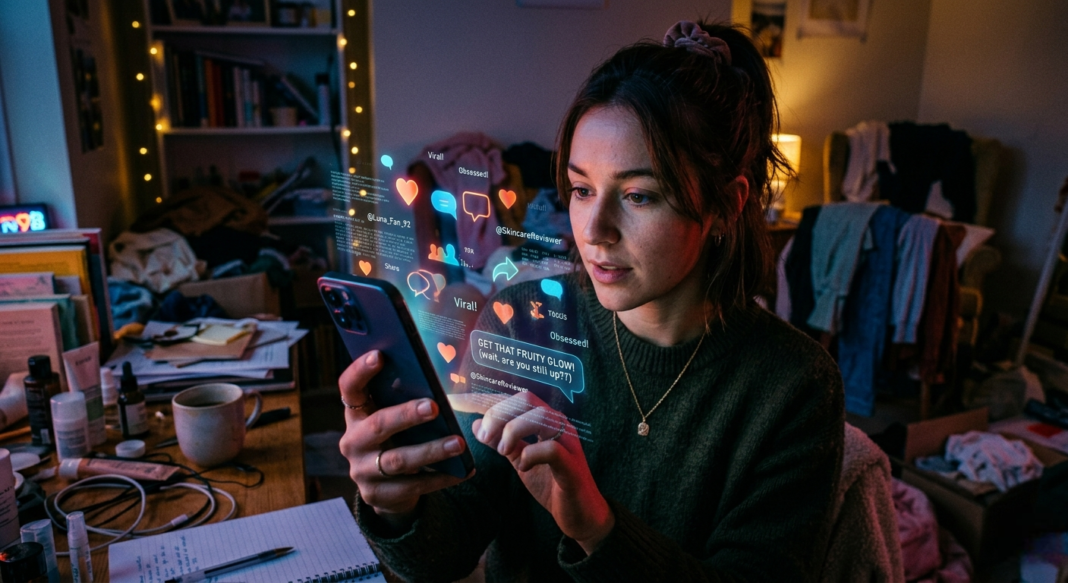
So yeah… the psychology behind ads that go viral.
I didn’t think I’d care about this stuff. Honestly. I thought viral ads were just… luck? Timing? Some intern hitting “post” at the right moment while Mercury was in retrograde or whatever.
But then one night—this is embarrassing—I shared an ad about socks.
Not even cool socks. Just… socks.
And not just shared it—I sent it to three people.
At 2:14 AM.
No one asked for that.
One friend replied:
“Are you okay?”
Fair question.
But that’s when it hit me—viral ads aren’t random. They feel random, but there’s something going on underneath. Something sneaky. Psychological. A little manipulative—but in a fascinating way.
Like, why did I care about socks at 2 AM??
Let’s talk about it.
It’s Not the Product. It’s the Feeling.
This one took me way too long to understand.
People don’t share products.
They share feelings.
That sock ad? It wasn’t about socks. It was about this weird, oddly satisfying transformation story. Before/after. Struggle/success.
It made me feel something.
And once you feel something, your brain goes:
“Hey… someone else should feel this too.”
Boom. Share button.
The 5 Emotions That Basically Run the Internet
I swear, if you crack these, you’re halfway into the world of viral advertising strategies.
1. Surprise (aka “Wait… what?”)
Anything unexpected stops the scroll.
- A weird opening
- A plot twist
- Something that doesn’t make sense at first
Your brain hates unfinished puzzles.
So it sticks around.
2. Humor (even dumb humor… especially dumb humor)
You ever laugh at something and immediately send it to someone?
Exactly.
I once saw an ad where a guy dramatically whispered financial advice like it was a secret spy mission.
I laughed. I still don’t know what he was selling.

3. Relatability (this one hits hard)
Ads that feel like:
“Wait… that’s literally me.”
Game over.
You’re not just watching anymore—you’re in it.
4. Inspiration (but not the cheesy kind)
Not “follow your dreams” energy.
More like:
“Hey… maybe I could actually do that.”
Subtle. Real. Slightly hopeful.
5. Anger (yep, this one too)
People LOVE sharing things that annoy them.
Not always healthy… but very effective.
Controversial ads spread like wildfire.
The Weird Brain Trick: We Share to Say Something About Ourselves
This part messed with me a little.
When you share something, you’re not just sharing it.
You’re saying something about you.
- “I’m funny”
- “I care about this”
- “This represents me”
That sock ad I shared?
Probably me trying to say:
“Look, I appreciate clever storytelling… also I haven’t slept.”
Attention Spans Are… Not Great
Let’s be honest.
If an ad doesn’t hook me in 2 seconds, I’m gone.
Actually, sometimes less.
Which is why the psychology behind ads that go viral starts with the first line.
Not the second.
Not the third.
The first.
Something like:
“I almost didn’t post this…”
Now I’m curious.
Now I’m staying.
The Power of “Open Loops” (sounds fancy, but it’s simple)
An open loop is basically:
“You start something… but don’t finish it yet.”
Like:
“This one mistake cost me $1,000…”
Now your brain is like:
“WAIT WHAT MISTAKE??”
You need closure.
So you keep watching.
It’s kind of like when someone says:
“I have gossip but I probably shouldn’t say it…”
Oh you’re definitely saying it now.
Authenticity (or at least the illusion of it)
Here’s the thing.
People don’t trust ads.
Shocking, I know.
But they do trust:
- Real people
- Messy videos
- Slight awkwardness
That’s why polished, perfect ads sometimes flop.
They feel… fake.
Meanwhile, someone filming in their kitchen with bad lighting?
Viral.
Make it make sense.
Social Proof Is Basically Peer Pressure (but digital)
When you see:
- “1M views”
- “Everyone’s talking about this”
- Comments blowing up
Your brain goes:
“Okay, I should probably care too.”
It’s like when a restaurant has a long line.

You don’t know why—but now you want in.
The Algorithm Is… Weirdly Human
This part surprised me.
Algorithms don’t just push ads randomly.
They respond to human behavior.
If people:
- Watch
- Like
- Comment
- Share
The algorithm goes:
“Ah yes, humans like this. More humans should see this.”
So in a way, viral ads are just… amplified human reactions.
Which is kinda cool.
And also slightly terrifying.
The “I Almost Didn’t Post This” Effect
I’ve tested this.
Ads that feel vulnerable perform better.
Stuff like:
“I wasn’t going to share this, but…”
Instant curiosity.
It feels real.
Even if it’s… strategically real.
(Yeah, there’s some psychology games happening here.)
A Quick Story about Psychology Behind Viral Ads
I once made an ad that I thought was brilliant.
Polished. Clean. Professional.
It flopped.
Hard.
Then, almost as a joke, I posted a rough version where I messed up halfway through and laughed.
That one?
Took off.
And I just sat there like:
“You’re kidding me.”
But also… not really.
Because people don’t connect with perfection.
They connect with real.
If You Want to Actually Create Viral Ads (without losing your mind)
Here’s what I’d focus on:
- Hook fast (like… immediately)
- Trigger emotion (any strong one works)
- Keep it real (or at least real-ish)
- Leave a little mystery
- Make it easy to share
That’s it.
No secret formula.
No magic hack.
Just… understanding people a little better.
One Last Thought about Psychology Behind Viral Ads
The more I study consumer behavior psychology, the more I realize something:
We’re all kinda predictable.
Not in a bad way.
Just… human.
We laugh at the same stuff.
We share what makes us feel something.
So when an ad goes viral?
It’s not random.
It’s just… human nature doing its thing.

